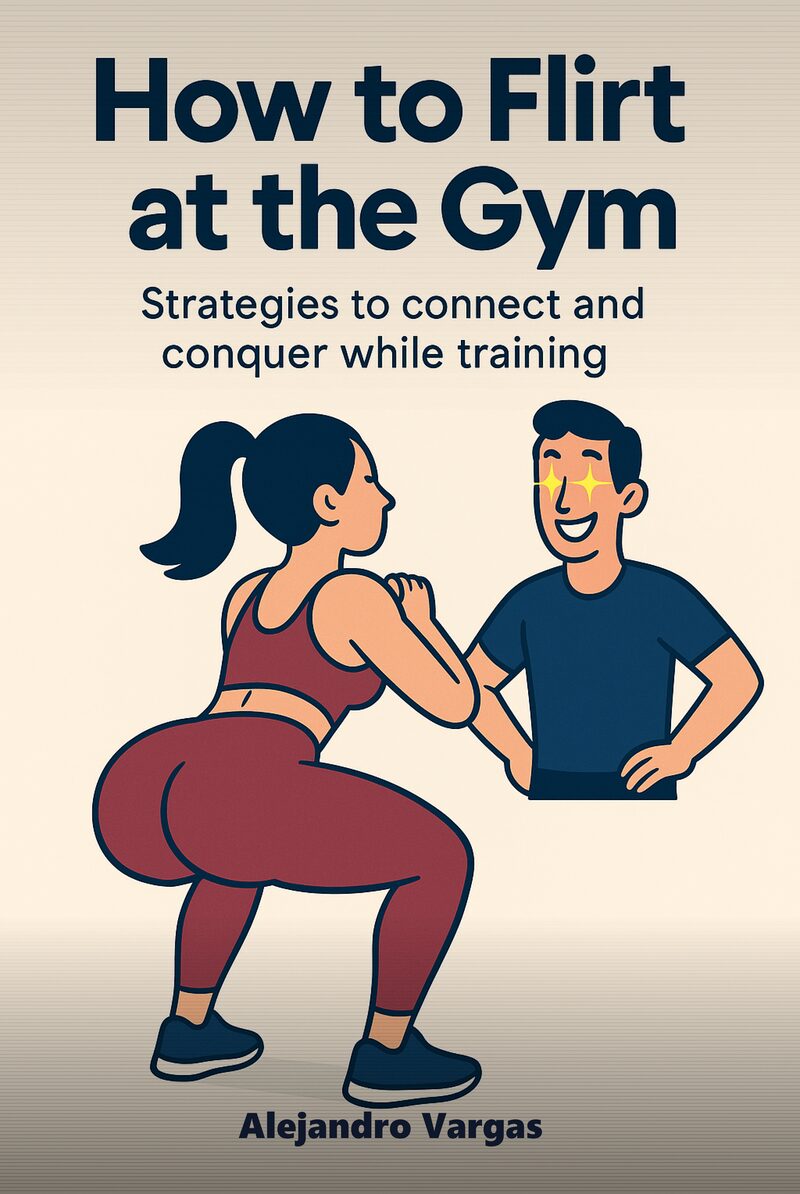
How to Flirt at the Gym
Strategies to connect and conquer while training
Where to get it
Audiobook · 2 h 53 min · Synthetic (AI) voice · How we make our books
Prices checked in the stores on 25 Oct 2026; they may change.
- Published
- Language
- English
- Formats
- Ebook · Audiobook
- Category
- Autoayuda
For general information only: not a substitute for help from a mental health professional. How we make our books
Spotted a typo or have a question about this book? Write to us
Synopsis
Read the beginning
From the chapter «Introduction to Flirting at the Gym»
The gym is not just a place where weights are lifted and sweat is shed on the treadmill. For many adults looking to expand their social circle, it has become a space where daily routines coincide, shared interests meet, and, yes, opportunities for human interaction arise. This book starts from a simple, practical premise: physical training and social skills do not have to follow separate paths. When combined with common sense, they can reinforce each other.
The approach is not about turning every session into a hunt for contacts, but about learning to read the environment, spotting natural moments for conversation, and applying basic communication techniques without losing sight of the main goal: training. All of this is delivered in a direct tone, with a touch of irony about situations anyone has experienced in a weight room, and advice that can be put into practice from day one.
Unlike bars or dating apps, the gym offers repetition. The same people tend to show up at similar times, use the same machines, and share a common language about sets, load progression, or recovery. That repetition reduces the initial pressure of having to make a great impression in a single encounter.
Observing patterns is useful. Someone who trains several times a week in the same time slot probably values consistency. Someone who asks about a machine or requests a spotter is already opening a minimal door to interaction. These details, which often go unnoticed when the focus is solely on training, are what allow brief, natural conversations to form.
Practical advantages of the setting:
Immediate conversation topics: exercises, equipment, the music in the room, or even the weather affecting attendance. Implicit rules of respect: no one expects long chats while someone is in the middle of a set. Diversity of profiles: from beginners to long-time trainees, which broadens possible affinities.
The book argues that improving the ability to start conversations should not interfere with the training plan. On the contrary: a well-managed brief interaction can even serve as active rest between sets. The key lies in proportion. […]