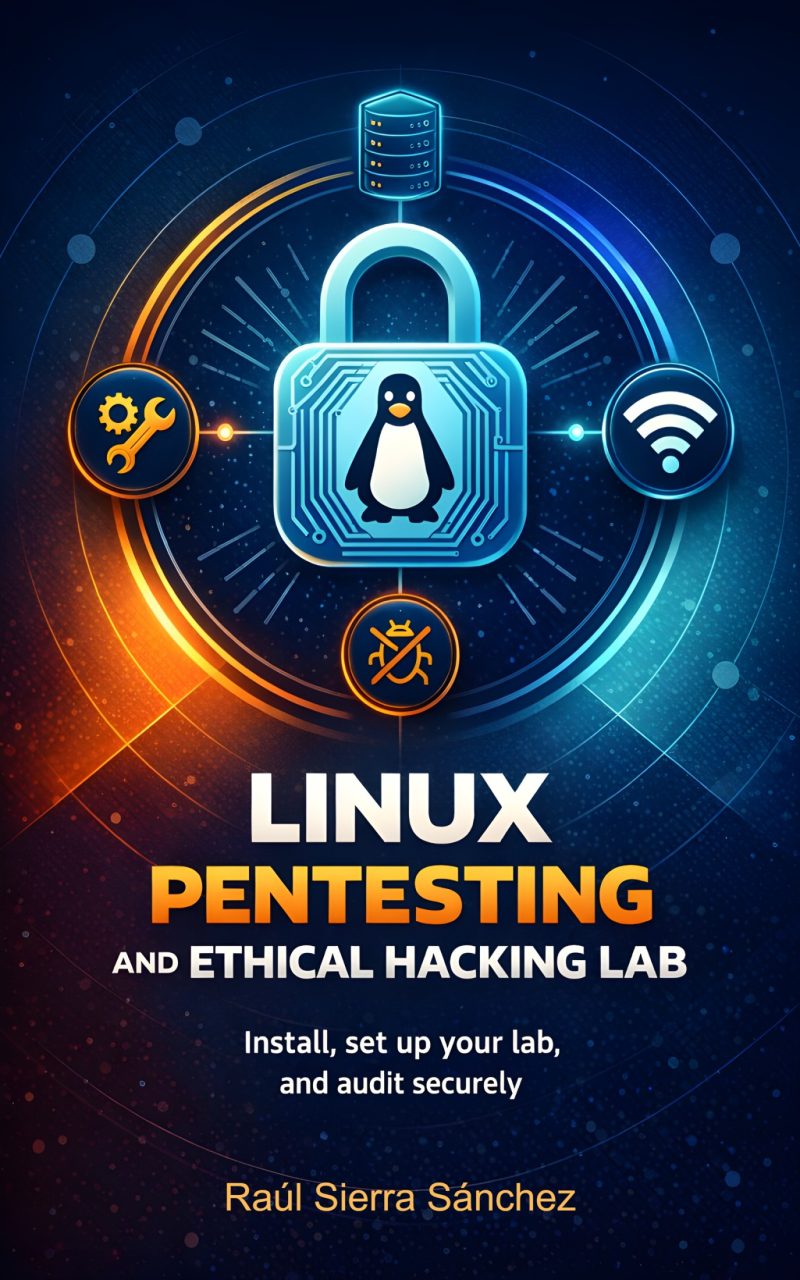
Linux Pentesting and Ethical Hacking Lab
Install, set up your lab, and audit securely
Available in:
EN
ES
Where to get it
Prices checked in the stores on 25 Oct 2026; they may change.
- Published
- Language
- English
- Formats
- Ebook
- Category
- Técnico
Spotted a typo or have a question about this book? Write to us
Synopsis
Are you attracted to cybersecurity, but every Kali tutorial ends in a boot failure or commands you don't understand?
Starting in ethical hacking is often frustrating: insecure installations, poorly configured networks, and practices that can get you into trouble.
Here you have cybersecurity step by step:
A clear guide to install and configure Kali Linux securely, and set up an isolated and legal lab.
What you will learn:
✓ Verify downloads: Check ISO files with SHA256 checksums, verify GPG signatures—never install compromised software
✓ Update and harden the system: apt update && apt upgrade, disable unnecessary services, configure firewall (UFW), secure SSH
✓ Follow a basic pentesting flow with Kali Linux: Reconnaissance → Scanning → Validation of findings—the methodology professional penetration testers use
✓ Take away repeatable procedures and checklists: Standardized workflows for consistent and reproducible results
✓ Solutions to typical failures: Fix network, permissions, and package errors without hours of troubleshooting
Structure: From beginner to competent pentester
Installation and Setup:
Install Kali Linux in VirtualBox or VMware (safe virtualization)
Network configuration for isolated pentesting lab
Host-Only Adapter vs. NAT vs. Bridged—which configuration when
Create snapshots for safe experimentation
System Hardening:
Secure Kali Linux: don't work as root, configure sudo correctly
Firewall rules with UFW (Uncomplicated Firewall)
Secure SSH access: key authentication, change port, fail2ban
Identify and disable unnecessary services
Build a Legal Pentesting Lab:
Metasploitable, DVWA, WebGoat—intentionally vulnerable systems for practice
Network segmentation: separate pentesting environment from production network
Legal foundations: When is pentesting legal? Understanding Computer Fraud and Abuse Act
Basic Pentesting Workflow:
Phase 1 - Reconnaissance:
Passive reconnaissance: WHOIS, DNS enumeration, Google dorking
Active reconnaissance: Nmap scans, service enumeration
Information gathering without leaving traces
Phase 2 - Scanning:
Nmap: port scans, service detection, OS fingerprinting
Vulnerability scanning with Nessus, OpenVAS
Web application scanning with Nikto, OWASP ZAP
Phase 3 - Validation:
Analyze and prioritize findings
Identify and eliminate false positives
Plan exploitation strategies
Typical Errors and Solutions:
Network Errors:
"No route to host": check VM network configuration
"Connection refused": verify firewall rules
Kali can't reach host machine: correct adapter settings
Permission Errors:
"Permission denied": understand sudo vs. root access
Tool installation fails: check permissions and package sources
Package Errors:
"Unable to locate package": run apt update, check repositories
Dependency conflicts: apt --fix-broken install
Version conflicts with Python tools: use virtual environments
Start today and turn curiosity into measurable results.
Perfect for:
Cybersecurity beginners who want to start with Kali Linux without frustrating errors
IT professionals learning ethical hacking for career transition
Computer science or cybersecurity students building practical pentesting skills
System administrators who want to conduct security audits
Hobbyists wanting to test and secure their home networks
Anyone frustrated by YouTube tutorials that skip important steps
What makes this book different:
Step-by-step without omissions: No skipped steps that confuse beginners
Security first: Learn how to test legally and ethically
Integrated error handling: Solutions to common problems included directly
Repeatable checklists: Workflows that work, not just theory
Beginner-friendly: Written for absolute beginners, no assumptions
No more boot failures. No more incomprehensible commands. No more frustration from poorly explained tutorials.
This book gives you the clear path to Kali Linux competence—from safe installation through system hardening to professional pentesting workflows.
Start today: Chapter 1, page 1, and in a few hours you'll have a working, secure Kali Linux pentesting lab.
By the end of this book, you'll have Kali Linux securely installed and hardened, operate an isolated legal pentesting lab, understand basic pentesting methodology, and be able to fix the most common errors yourself—ready for OSCP preparation or professional security audits.